The Watching Sky: Birds of Prey in Art Across Time
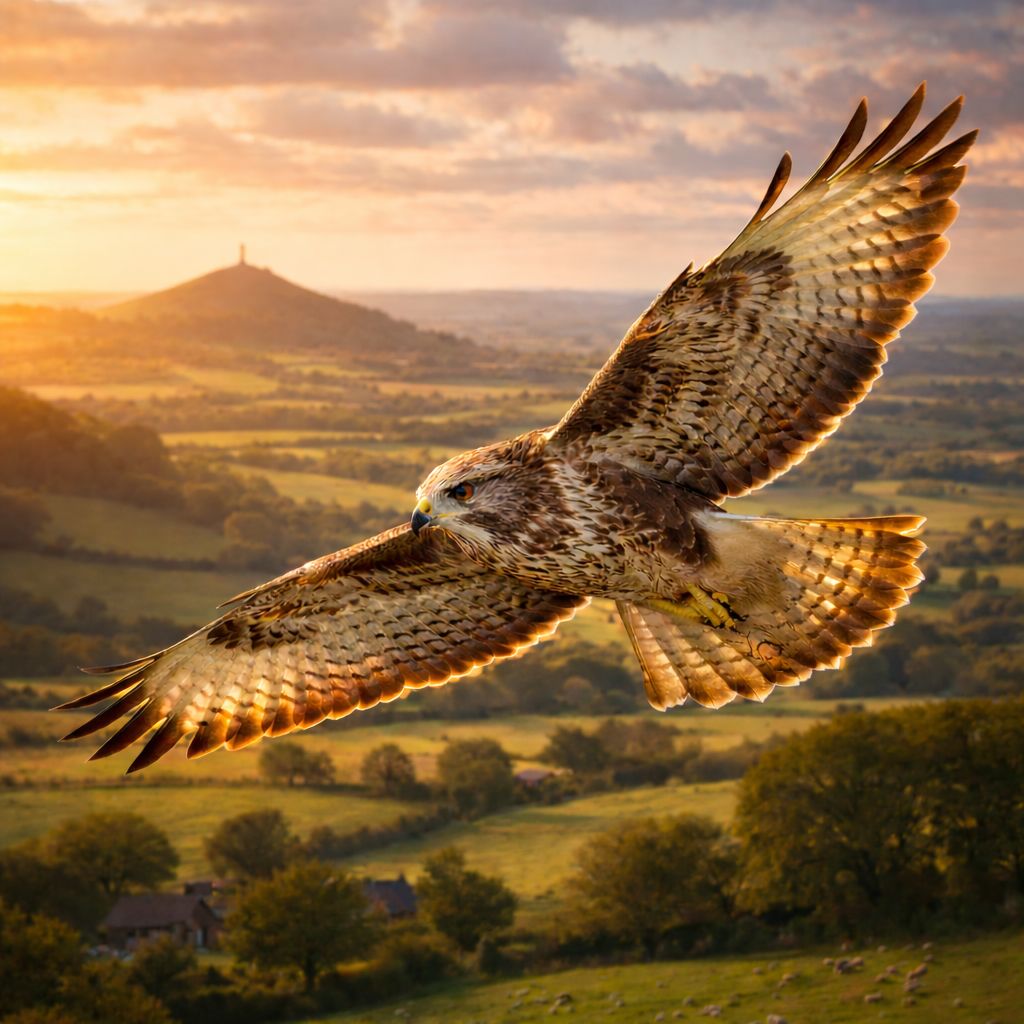
A common buzzard in evening light over Somerset. Now widespread across the county, Buteo buteo is a familiar sight, often seen circling above fields and woodland, with known nesting sites near the quarry at The Old Vicarage in Leigh-on-Mendip.
From the earliest visual cultures, birds of prey have carried a charge far beyond their physical form. Their defining qualities, height, precision, and lethal clarity, lent themselves naturally to symbolic use.
In ancient Egypt, the falcon-headed Horus stood not simply for kingship, but for divine oversight: a being who sees from above and intervenes with purpose. The bird is not ornamental; it is authority embodied.
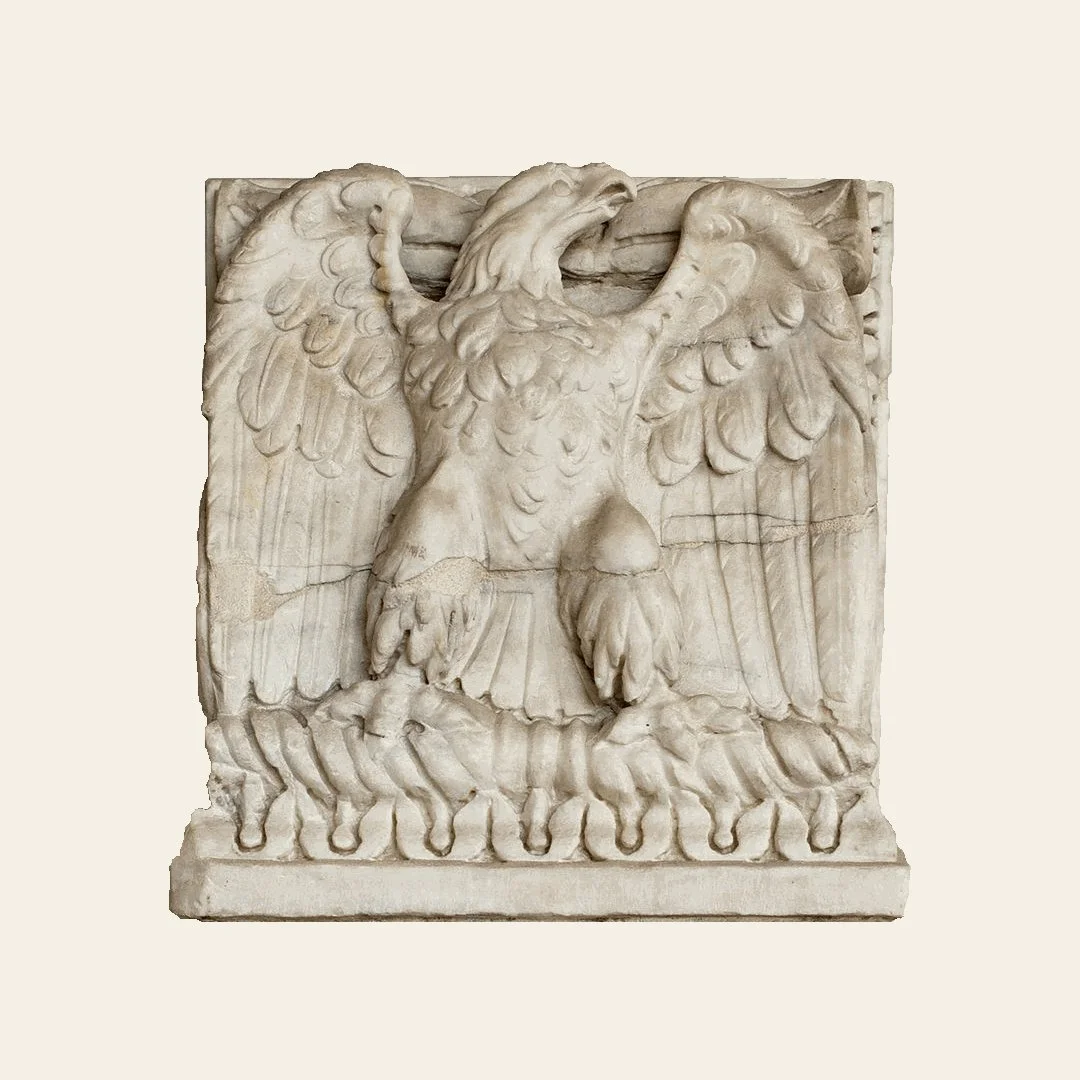
Roman Aquila (legionary eagle standard), carved in relief — an enduring emblem of authority and cohesion, where the eagle’s outstretched form embodies the unity and identity of the legion it represented.
Image credit: Jastrow, Public domain, via Wikimedia Commons
Across Rome, the eagle functioned as imperial shorthand. Carried on standards, carved into reliefs, it signified dominion and continuity. In Mesoamerican cultures, particularly among the Aztecs, the eagle was both cosmological and martial, bound to solar cycles and sacrificial ritual. These were not passive depictions. The bird of prey marked a threshold between human and divine, earth and sky, instinct and intention.
Medieval Europe softened and redirected this symbolism. In illuminated manuscripts and tapestries, falcons appear in aristocratic hunting scenes. Here, the bird becomes a partner, disciplined, trained, yet still carrying a residual wildness. It is an emblem of control, but also of proximity to nature. The act of falconry itself becomes symbolic: a negotiation between instinct and order.
Women Artists: Observation, Anatomy and Intimacy
Katy Hessel’s The Story of Art Without Men offers a compelling rebalancing of art history, bringing long-overlooked women artists into clearer view. It provides a useful lens through which to reconsider how observation, authorship and attention have been shaped, and who has been credited for them.
Women have played a crucial, often under-recognised role in shaping how the natural world has been seen, studied and represented. In the context of birds of prey, their contribution is less about a single subject and more about a way of looking. Three figures help trace this progression:
Maria Sibylla Merian, working in the 17th century, approached the natural world with a level of empirical attention that was radical for her time. Though best known for her studies of insects, her work established a methodology: close observation, ecological context, and respect for the subject as part of a living system. This way of seeing - patient, precise and grounded in lived observation - underpins later natural history illustration, including the careful depiction of birds of prey.
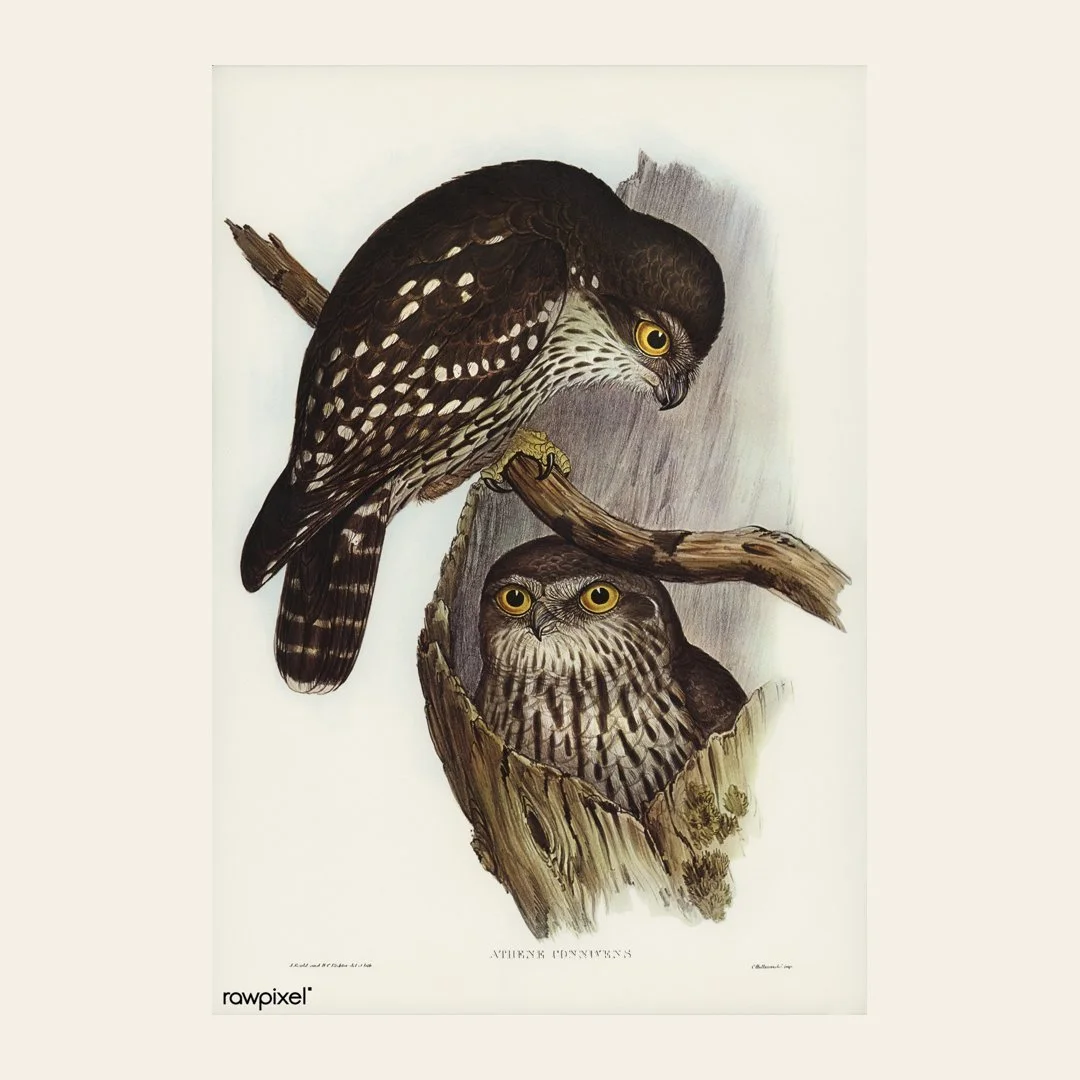
Winking Owl (Athene connivens), illustrated by Elizabeth Gould for John Gould’s Birds of Australia - a study in attentive observation, where form, feather and posture are rendered with quiet precision.
Image credit: Rawpixel, CC BY-SA 4.0 via Wikimedia Commons
Elizabeth Gould, an early to mid 19th-century natural history illustrator, contributed significantly to some of the most important ornithological publications of the era. Her depictions of raptors — hawks, eagles and owls — are not merely taxonomic. They carry a quiet dignity. The birds are composed, often still, their power implied rather than dramatised. There is restraint here, and in that restraint, authority.
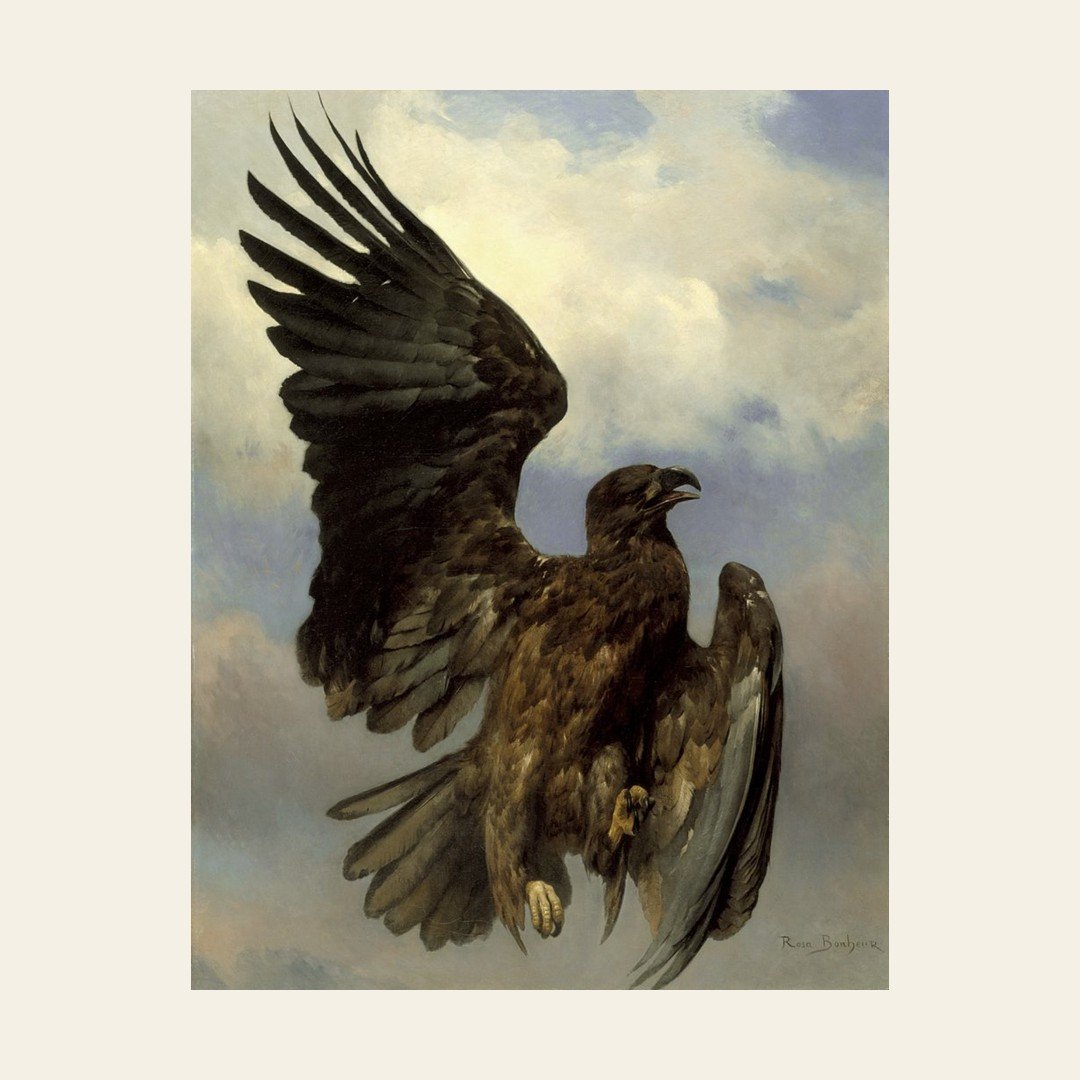
Rosa Bonheur, The Wounded Eagle, c. 1870 — a powerful study of strength interrupted, where the grandeur of the eagle’s form is held in tension with vulnerability, its descent rendered with both dignity and restraint.
Rosa Bonheur is a 19th-century painter famous for her painting The Horse Fair that now hangs in the Metropolitan Museum of Art in New York. When birds of prey appear in her work, they are not symbols first, but beings. There is a refusal to exaggerate or mythologise. Instead, Bonheur presents a kind of grounded majesty.
Across these women’s work, a pattern emerges: birds of prey, like the natural world more broadly, are not simply emblems of power, but subjects worthy of attention in their own right. Observation replaces projection. Intimacy replaces spectacle.
Romanticism to Modernism: Projection and Psychology
By the 18th and 19th centuries, the symbolic register of birds of prey expands into the emotional and psychological. Romantic painters use them to evoke solitude, danger, and the sublime. A lone eagle against a vast sky becomes a stand-in for human isolation, ambition, or transcendence.
In this period, the bird is often less about itself and more about what it allows the artist to express. It becomes metaphor. The precision of earlier natural history gives way, in some cases, to atmosphere and mood.
Moving into modernism, the form of the bird begins to fracture. Artists abstract, simplify, and reconfigure. The essence of the raptor, its sharpness, its tension, its geometry, is distilled into line and shape. What remains is not likeness, but energy.
This shift marks an important transition: from symbol as fixed meaning to symbol as open field. The bird of prey no longer stands for one thing. It becomes a site of interpretation.
Contemporary Practice: Power, Ecology and Reclamation
In contemporary art, birds of prey often carry layered and sometimes conflicting meanings. They appear in conversations around ecology, surveillance, gender, and power structures.
Artists such as Kiki Smith have used birds, including owls and other raptors, to explore themes of embodiment, mortality, and transformation. In her work, the bird is both guardian and witness, a presence that is at once intimate and otherworldly.
Female artists in particular have begun to reclaim the symbolism of the raptor. Historically associated with masculine ideals of dominance and conquest, the bird is reinterpreted as a figure of autonomy, perception, and quiet authority. It is no longer simply a predator, but a being that navigates complex ecosystems, both literal and symbolic.
There is also a growing ecological consciousness. Birds of prey, once persecuted and driven to the edge, now appear in art as indicators of environmental health or fragility. Their presence signals balance; their absence, loss.
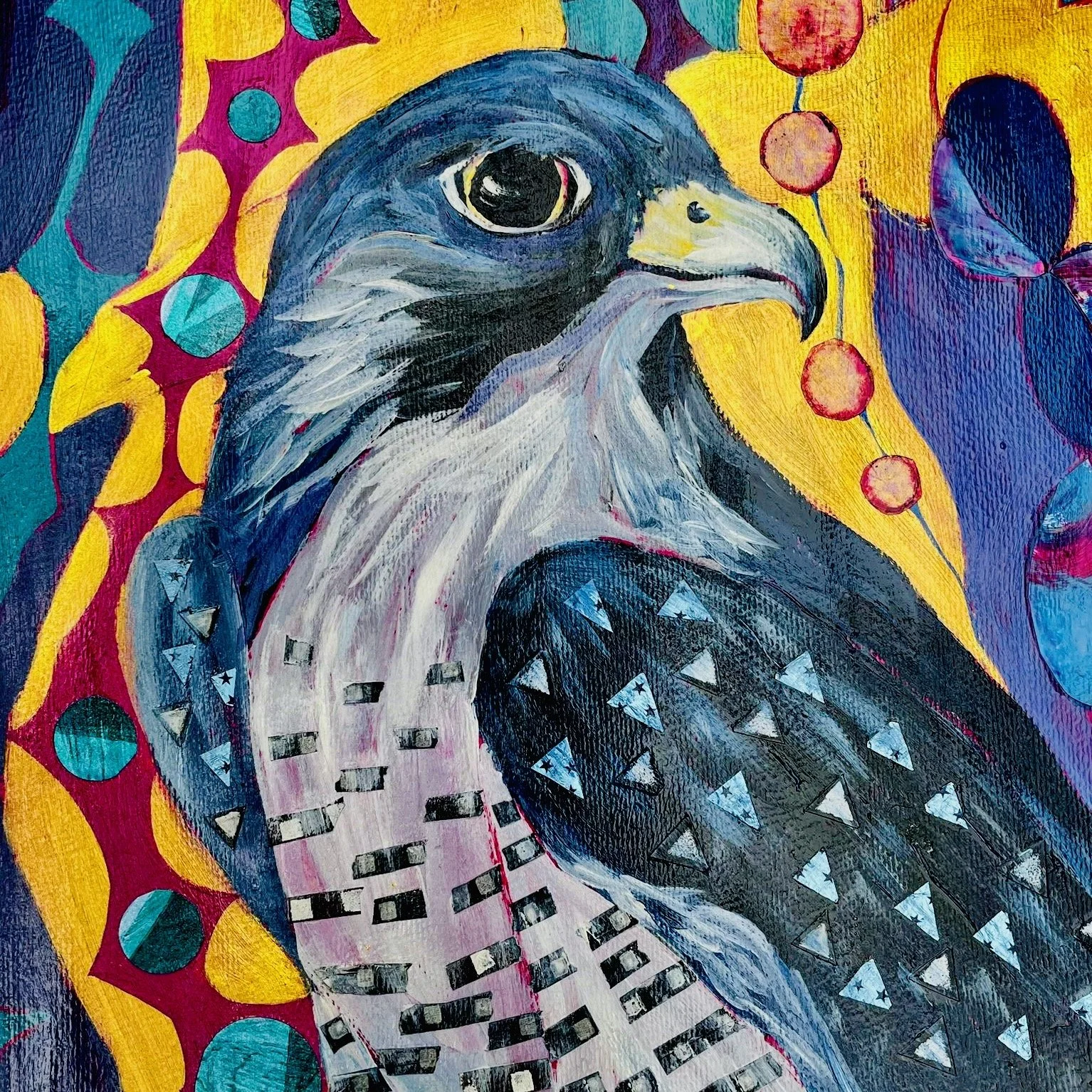
A falcon rendered in bold colour and pattern by Julia Blaker, where watchfulness and symbolism meet in a contemporary folk language.
Folk Traditions: Pattern, Protection and Story
Alongside fine art, folk traditions have long incorporated birds of prey into visual language. Here, the symbolism is often more direct, though no less rich.
In Scandinavian and Eastern European textiles, stylised eagles and hawks appear as protective motifs. Repeated, patterned, they serve as guardians of the household. In Indigenous North American beadwork and carving, the eagle holds profound spiritual significance, representing connection to the creator and the transmission of prayer.
British folk art tends to be more understated, but birds still appear in carving and decorative arts, often linked to land, seasonality, and local identity. These are not grand, singular images, but embedded symbols, woven into daily life.
Folk depictions strip the bird of prey back to its essential qualities: watchfulness, protection, continuity. They are less concerned with realism, more with meaning that can be carried, repeated, and shared.
Closing Reflection
Across cultures and centuries, the bird of prey has remained a constant, but its meaning has never been fixed. It has been god, weapon, companion, metaphor, subject, and symbol.
What shifts most notably, particularly through the work of women artists, is the nature of attention. Where earlier traditions often projected power onto the bird, later and especially female-led practices tend to meet it on its own terms. The result is a quieter, more complex symbolism: one that holds strength without spectacle, and presence without domination.
In this way, the bird of prey continues to do what it has always done in art. It invites us to look up, to look closely, and to consider what it means to see, and to be seen.
Fancy Painting a Brid of Prey?
What begins as symbol, across history, returns ultimately to presence.
Our The Bird Who Sat For a Portrait course offers that return.
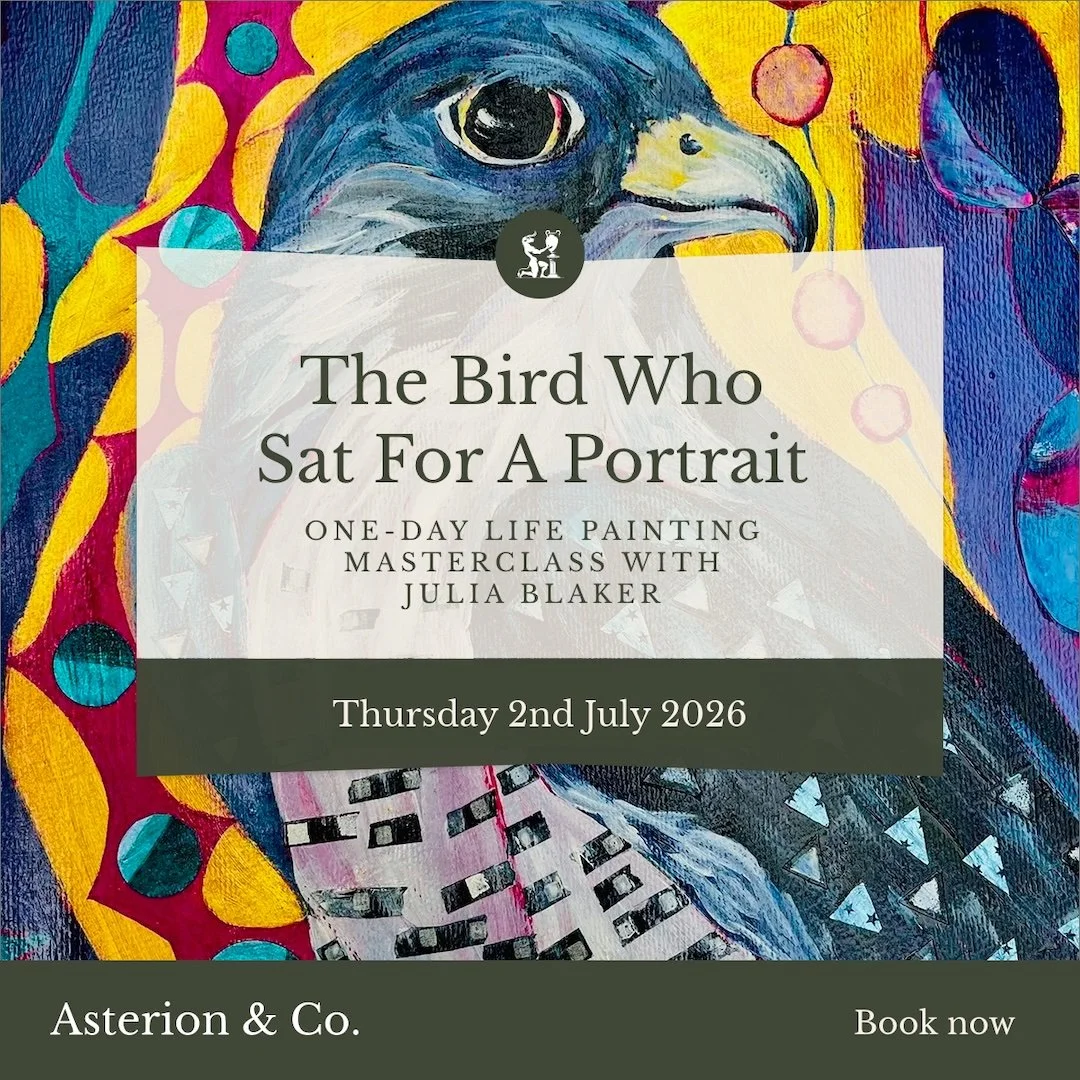
Spaces are limited, and booking is now open.
On Thursday 2 July 2026, at The Old Vicarage in Leigh-on-Mendip, you will spend the day working from life with a bird of prey, guided through the process of observation and painting in a small, focused group. It is an uncommon opportunity to look closely, to understand structure and form, and to translate that into your own work.
For those drawn to birds of prey not just as symbols, but as subjects, this is a rare and compelling experience.