Getting Ahead in the Vegetable Garden: The Ancient Art of Spring Preparation
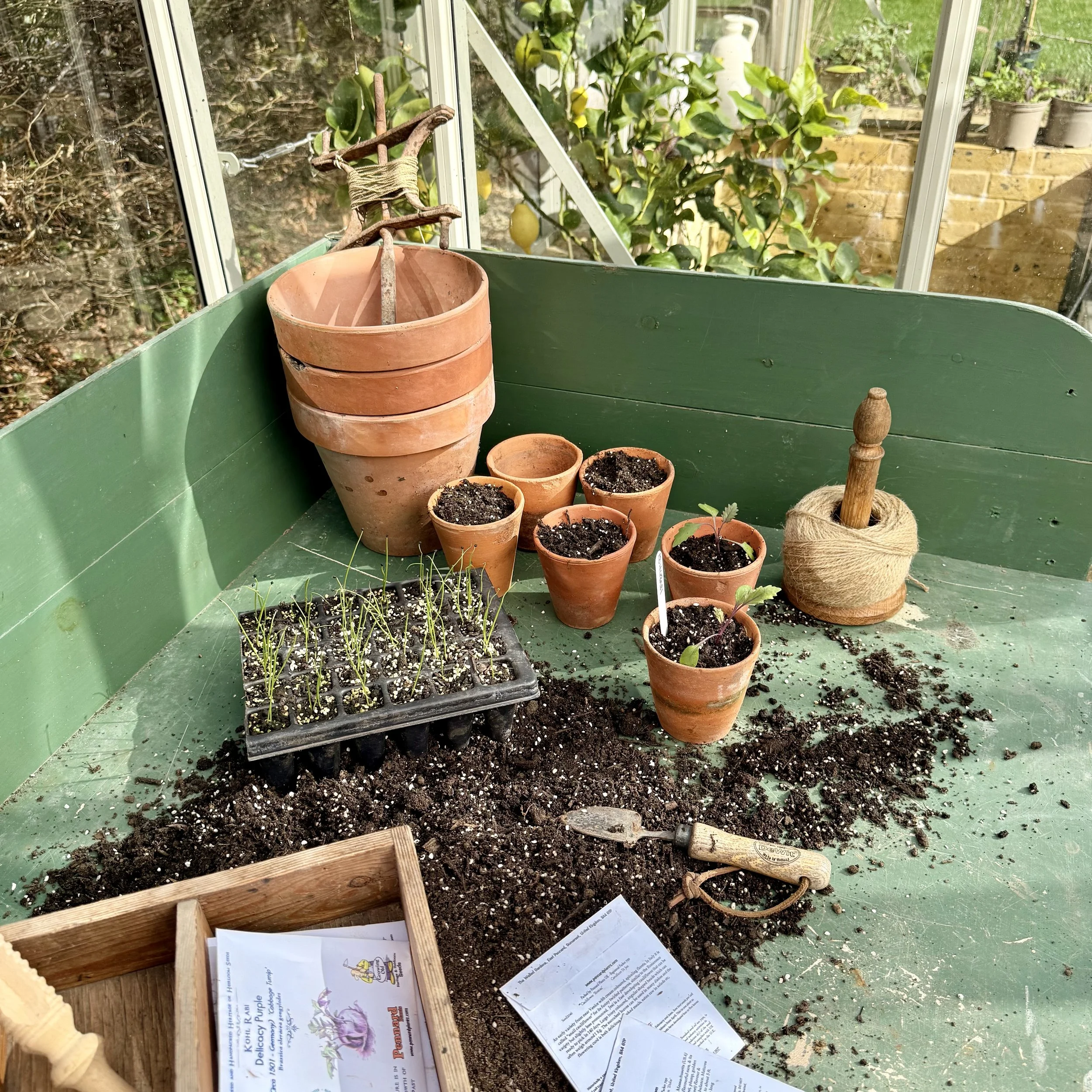
The first sowings of spring - Pennard Plants heritage seeds, soil and simple tools coming together in the quiet work that shapes the season ahead.
In the vegetable garden, the most important work of the year often begins before a single crop has appeared above the soil.
Early spring has long been the decisive moment in the growing calendar. It is the point at which the shape of the season is quietly determined. Beds are prepared, soil is restored, and the first sowings begin under glass. Done well, these weeks establish a momentum that carries forward into summer and beyond.
There is a particular clarity to the garden at this time. Structure is visible. Decisions are not yet concealed by growth, but expressed directly in soil, spacing and intent. It is a moment that rewards foresight.
This rhythm has deep roots in the history of the British kitchen garden. Behind the brick walls of country houses, skilled gardeners worked methodically through the early part of the year, restoring soil after winter, incorporating compost and manure, and preparing beds with care. Glasshouses and cold frames were brought into use early, allowing the first seedlings to establish while the ground outside was still cold. Planning, seed saving and propagation formed part of a continuous craft, refined over generations.
While modern vegetable gardens may be smaller in scale, the underlying principles remain remarkably consistent.
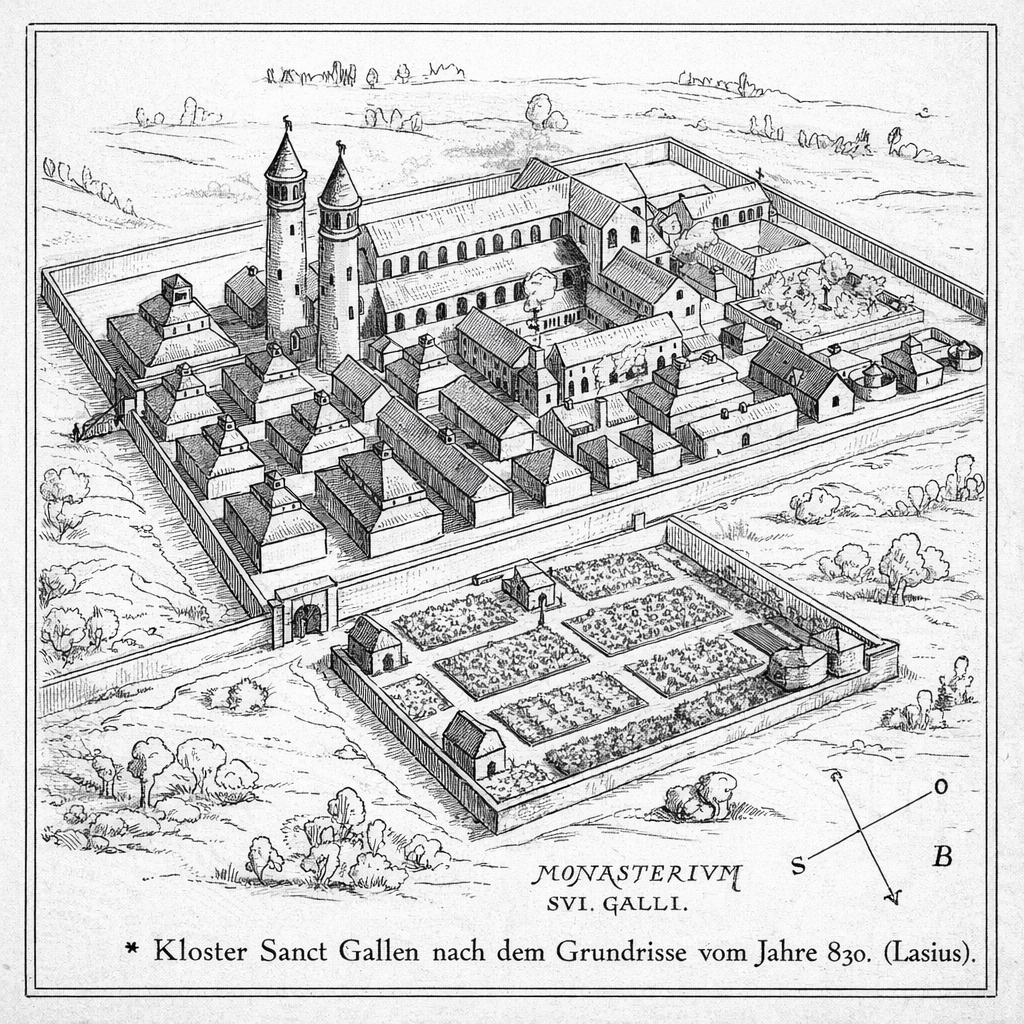
The ninth-century Plan of St. Gall monastery showing early monastic garden layouts.
The Origins of the Kitchen Garden
The roots of the kitchen garden stretch back to medieval Europe. Within monastery walls, monks cultivated carefully ordered plots of vegetables, herbs and medicinal plants to sustain their communities. These were practical spaces, but also centres of observation and continuity, where knowledge of plants was recorded, tested and passed on through generations.
One of the most revealing records of this early horticulture is the ninth-century Plan of St. Gall, a detailed drawing of a monastic complex that includes clearly defined beds for vegetables, herbs and fruit trees. It shows how closely food production was integrated into daily life, and how deliberately these growing spaces were organised.
Over time, these monastic traditions informed the development of the British kitchen garden. By the seventeenth and eighteenth centuries, walled gardens had become a defining feature of country estates. Within their sheltered boundaries, gardeners refined a set of enduring principles: structured beds, careful crop rotation, composting, and the saving of seed. Geometry served not simply aesthetic ends, but practical ones, allowing clarity of movement, efficient cultivation, and control over the growing environment.

A leather-bound folio of Philip Miller’s Gardeners Dictionary (1732), held in the Asterion & Co. collection — a working text of the eighteenth-century kitchen garden, available for guests to explore during our courses.
It was in this context that Philip Miller, head gardener of the Chelsea Physic Garden and author of The Gardeners Dictionary, helped to codify the working knowledge of the kitchen garden. Writing in the eighteenth century, Miller emphasised that success begins not with sowing, but with the condition of the soil itself. Ground should be well worked, properly enriched before a single seed is set. His writing reflects a culture in which preparation was understood not as preliminary effort, but as the foundation of all productive growing.
What we now describe as heritage practice is, in many respects, simply the accumulation of what has proven to work.
Seeds, Soil and Stewardship
At the centre of every successful vegetable garden lies soil: living, complex and constantly changing.
Healthy soil is not an inert medium, but an active system composed of microorganisms, fungi and invertebrates working in concert to break down organic matter and cycle nutrients. For generations, gardeners have enriched this system through compost, manure and mulching, gradually building fertility over time.
Spring preparation is therefore not simply a matter of planting. It is a process of restoration. Soil structure is improved, moisture is managed, and organic matter is incorporated so that beds are ready to support new growth. When this work is done with care, the garden responds with vigour.
There is also a quieter, psychological dimension. A well-prepared garden removes hesitation. It allows decisions later in the season to be made with confidence, because the underlying structure is already sound. Crops are introduced into a system that is working, rather than forcing solutions in the moment.
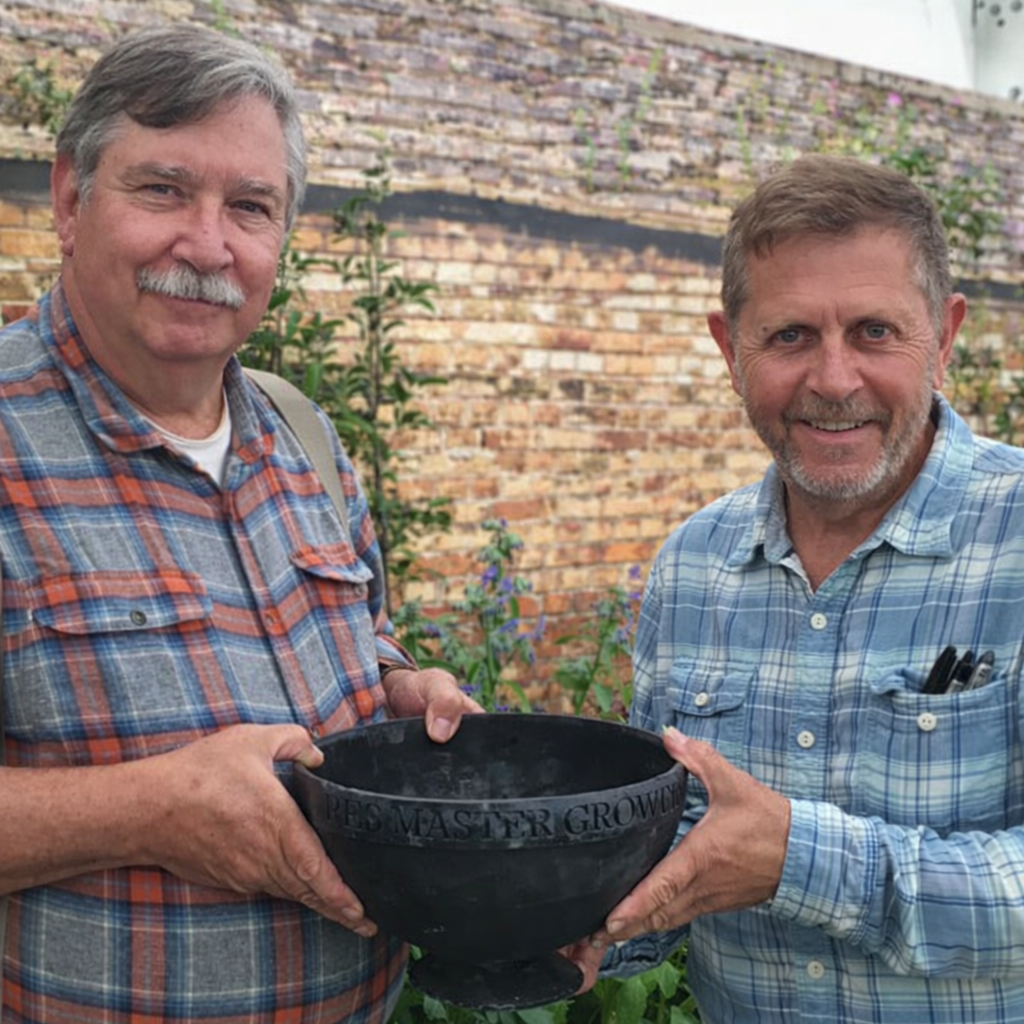
Mike Milligan (left) and Chris Smith, the owners of Pennard Plants, receiving the RHS Master Growers Award.
Seeds, Heritage and the Power of Variety
For nurseries such as Pennard Plants, our collaboration partner, the story of the vegetable garden begins with the seed.
Over the last twenty-five years, the Somerset nursery has built a reputation for its catalogue of open-pollinated vegetables and heritage varieties. Much of this work has been shaped by Mike Milligan, whose commitment to preserving historic crops has helped ensure their continued availability.
These seeds carry more than the promise of yield. They embody flavour, resilience and genetic diversity, linking contemporary growers with those who cultivated the same varieties in earlier centuries. They remind us that the vegetable garden is not only a place of production, but of continuity.
Working alongside Pennard Plants here in The Old Vicarage kitchen garden in Leigh-on-Mendip, this perspective becomes clear. The focus is not simply on what to grow, but on how to establish the conditions in which crops can thrive: soil, timing, spacing and care.
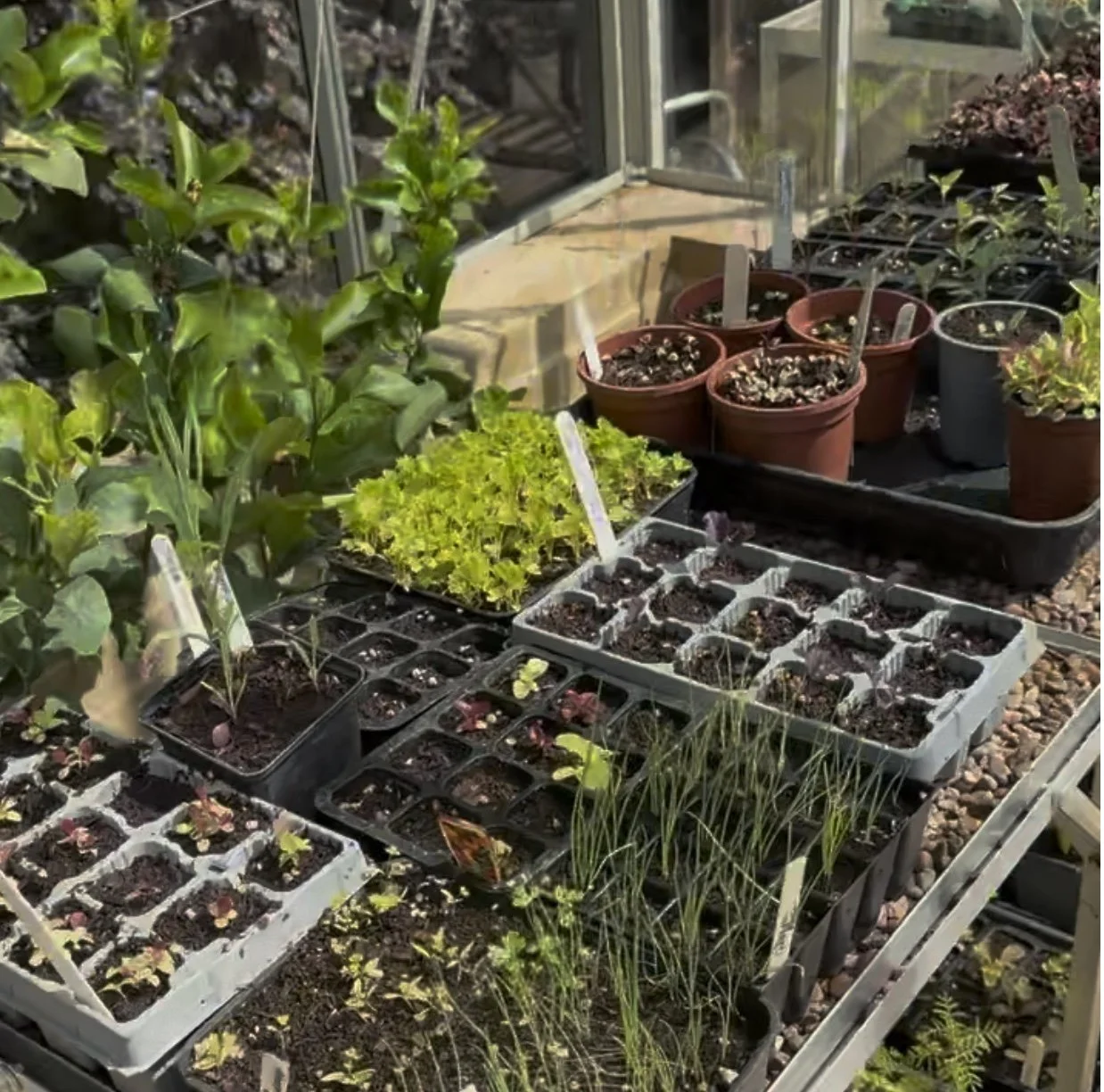
Early spring seedlings in the greenhouse, where the first vegetables of the season begin their journey from seed trays to garden.
Learning the Rhythm of the Garden
Each spring, these traditions continue quietly in gardens across the country.
At Asterion & Co., Chris Smith shares this seasonal knowledge through small, practical workshops held within Pennard’s kitchen show garden. His Getting Ahead in the Vegetable Garden: A Two-Day Spring Preparation Course, taking place on Wednesday 15th and Thursday 16th April 2026, explores the essential early-season work that underpins a productive year, from soil preparation and composting to seed sowing, propagation and planning.
The emphasis is not purely theoretical. It is grounded in observation and practice, echoing the way knowledge has long been passed between gardeners: through doing, through watching, and through returning to the same ground year after year.
Because in the vegetable garden, abundance rarely begins with the harvest.
It begins, as it always has, with preparation.

Come learn the art of growing fruit trees under cover and getting abundant crops

Tomatoes, chillies, aubergine… Chris imparts his knowledge on best care and pest management
Few growers understand these traditions better than Chris Smith of Pennard Plants - a specialist fruit and vegetable nursery celebrating 25 years in business.
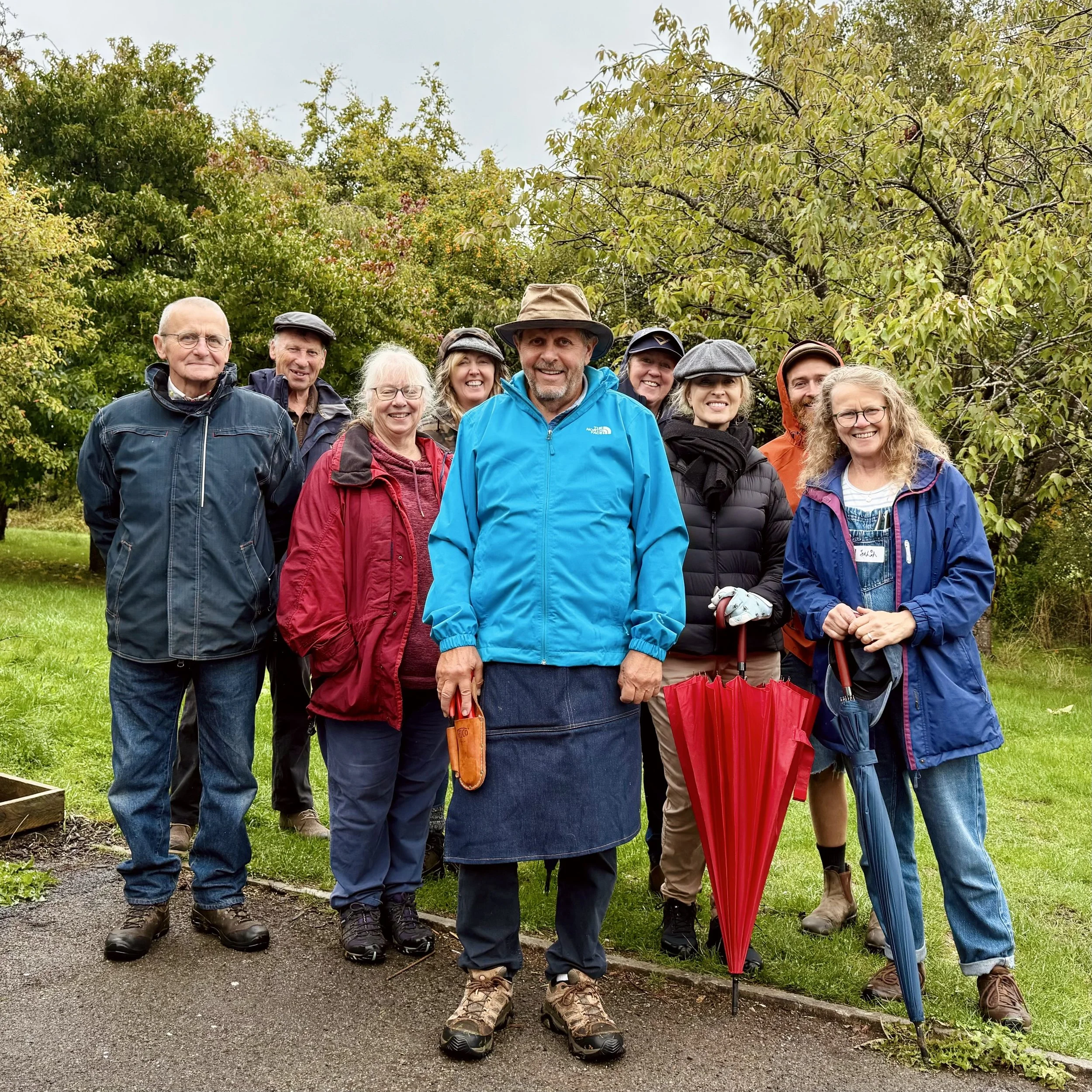
Chris Smith of Pennard Plants with gardeners during a course day at Asterion & Co., sharing decades of practical growing knowledge.
Spring Courses with Chris Smith:
The Sheltered Orchard: Growing Fruit in Polytunnels and Glasshouses - Thursday 14th May 2026
The Art of Protected Vegetable Growing: Polytunnels, Glasshouses and Season Extension - Saturday 16th May 2026