Planting Potatoes: Reading the Season, Not the Calendar
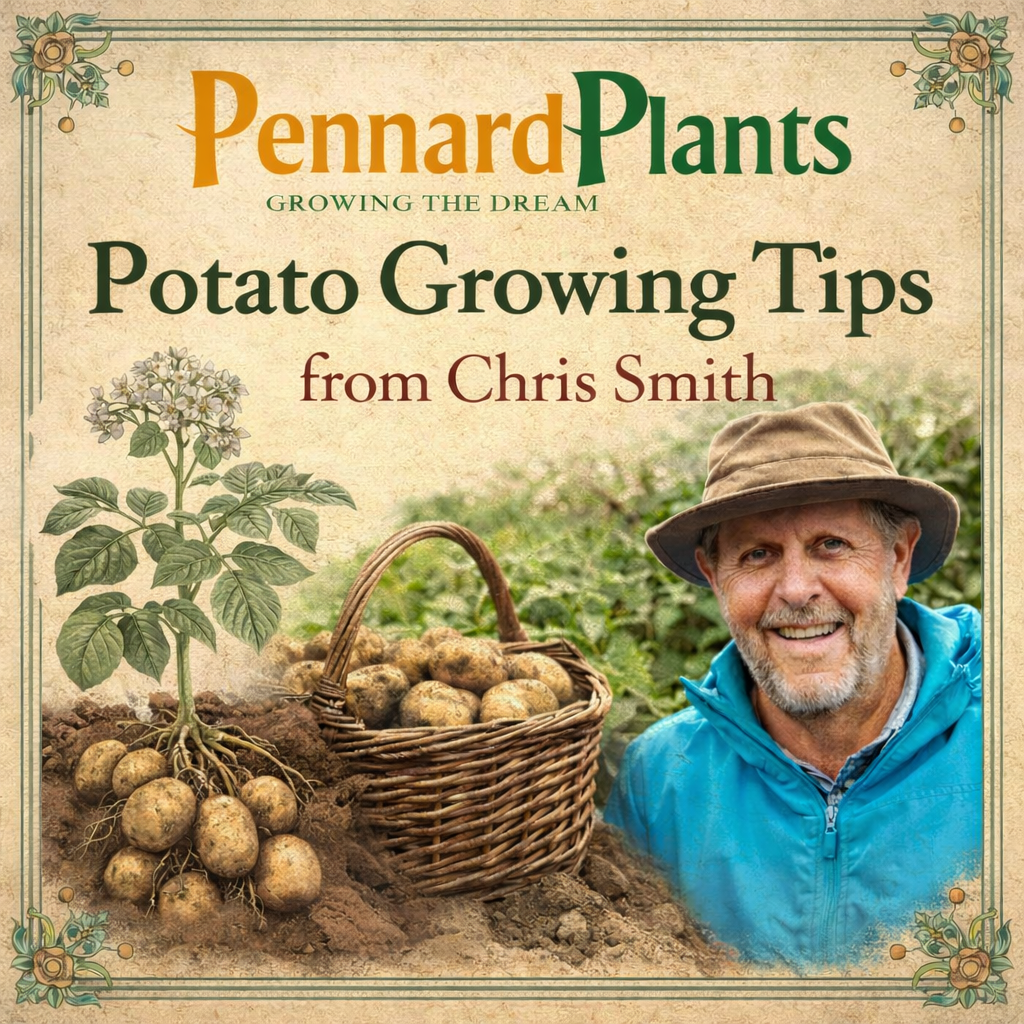
Chris knows his potatoes, having tried and tested the mass of varieties offered online from Pennard Plants, including varieties exclusive to the UK.
The marker, not the rule
There is a long-standing marker in the gardening calendar that suggests potatoes should go into the ground on St Patrick’s Day. It is a useful tradition, but only as a guide. The more reliable principle, and the one worth trusting, is simpler and more observant: plant when the soil is ready.
Understanding the soil
Potatoes ask for a certain kind of beginning. Not cold, not waterlogged, not hurried. They respond best when the soil has started to warm, when it crumbles rather than clings, and when the ground feels open to growth rather than resistant to it. In a wet spring, patience will nearly always be rewarded. The planting window is generous, stretching from mid March through April and often into early May, particularly for maincrop varieties. Many growers choose to stagger their planting across this period, allowing the harvest to unfold steadily rather than all at once.
Preparing well
Preparation begins before planting. Seed potatoes benefit from chitting, set somewhere cool and bright so that short, sturdy shoots form. It is a small act, but one that sets the tone for what follows. The soil, too, should be given attention. Potatoes are generous plants but also hungry ones, and they thrive in ground that has been enriched with compost or well-rotted organic matter.
Planting with intent
When planting, place the tubers with their shoots facing upwards, around 10 to 15 centimetres deep. Spacing matters more than it first appears. Early varieties are comfortable at around 30 centimetres apart, while maincrop potatoes need closer to 40 centimetres, with rows set 60 to 75 centimetres apart. This is not simply about order, but about allowing each plant the space to form well and without competition.
Tending through the season
As the plants begin to grow, the practice of earthing up becomes important. Drawing soil up around the stems protects young growth from late frosts and encourages a more abundant crop beneath the surface. It is one of those quiet, repeated gestures that defines good kitchen gardening.
Light and space
Position plays its part. Potatoes favour open, sunny ground where they can gather warmth and light. Where space is limited, they adapt well to containers, whether in large pots, sacks or tubs. In these cases, compost is added gradually as the plants grow, mirroring the process of earthing up in the open ground.
The harvest to come
Harvest follows the rhythm of the variety. First earlies arrive in early summer, offering a fleeting, tender crop. Maincrops take longer, but reward the wait with a harvest that stores well into the colder months.
A quiet reward
There is, perhaps, a particular satisfaction in growing potatoes that sets them apart. Months after planting, you reach into the soil and lift the plant to find a cluster of new tubers gathered quietly beneath the surface. It is a moment that feels both elemental and generous, a small but enduring pleasure of the kitchen garden.
If you are planting this week, the question is not whether the date is right, but whether the ground is. And if it is, then you are exactly on time.
Come and learn with Chris
Chris teaches a wide range of courses at Asterion & Co. from vegetable growing, soft fruit management, fruit trees under glass and more. Check out all his courses here.
Learn more about Chris’s journey with Pennard Plants and his passion for growing your own fruit and veg in this Asterion Journal article.
Read more about Pennard’s ongoing collaboration with Asterion & Co. and how our home here in Leigh-on-Mendip, Somerset, has become the kitchen show garden for this thriving horticultural business in its 25th year.