The quiet strength of camaraderie
WORK WELL
Inspired by heritage. Curious about what endures.
Work Well is where Neil Crump reflects on leadership,
culture and the experiences that shape how we work with others.
The question running through this is simple:
what is worth carrying forward?
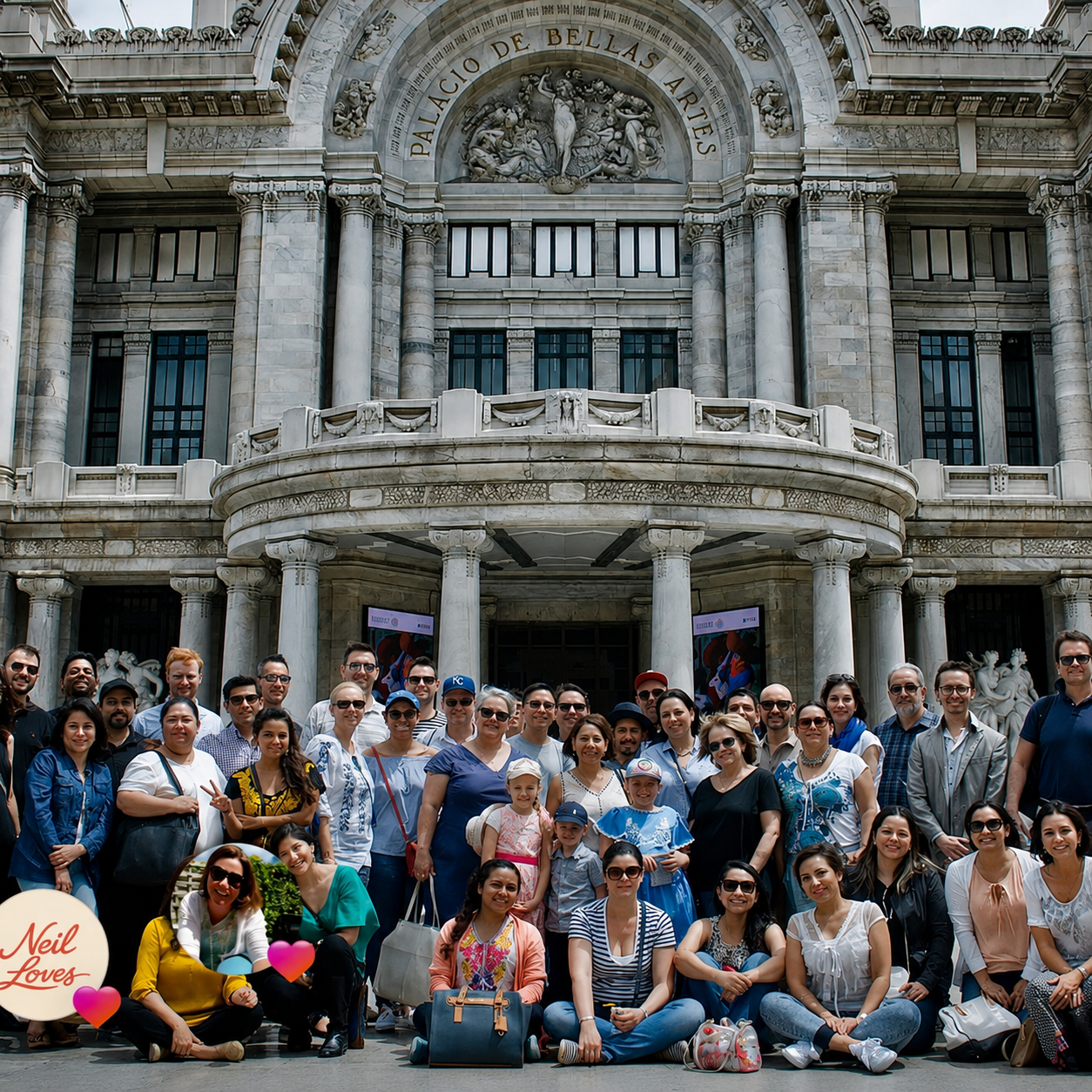
Scrolling through the GHMC Instagram brought a smile to my face. So, many joy-filled memories of our meet ups around the world, this one in Mexico City.
Some of the most valuable things I’ve learned about leadership weren’t written in strategy documents or taught in business schools.
They were experienced.
For fifteen years I belonged to a remarkable global community of independent healthcare marketing and communications agencies called GHMC. I spent twelve of those years leading the European agencies before becoming Global Chief Growth Officer.
Looking back, my role wasn’t important, it’s what that organisation taught me.
Because what made GHMC exceptional wasn’t simply its extensive geographic reach or its independent ownership structure (read: genuinely entrepreneurial). It was camaraderie.
As I prepared to leave the network, one of the final projects I worked on was helping to codify its values. It wasn’t a difficult exercise.
We all knew which value belonged at the top: Camaraderie.
Not because it sounded warm or welcoming, but because it explained why the network worked so well. It was the emotional heart of the organisation. Everything else grew from it.
Every year agency founders and leaders gathered from around the world. Those meetings were the highlight of my working year.
On paper we couldn’t have been more different. Different countries. Different cultures. Different businesses. Some also served other sectors beyond healthcare.
Yet we were all wrestling with remarkably similar questions: leadership, growth, succession, culture, client acquisition, difficult decisions, shifting markets, and how to build organisations that might outlast us.
Something unusual happened in those rooms and on twice-monthly conference calls.
People genuinely wanted one another to succeed.
Ideas were shared freely. Problems were discussed with candour. People talked openly about their mistakes. Successes were celebrated without envy.
Nobody became weaker because someone else grew stronger.
In fact, the opposite happened.
Everyone understood that the network thrived when each individual member flourished.
Today some of those founders have sold their businesses. Some are building new ventures. Most remain exactly where they’ve always been at the helm of the business they created..
Yet whenever we speak there’s an immediate sense of excitement. We champion one another’s ideas. We make introductions. We celebrate good news.
What’s worth carrying forward?
If I could carry one lesson from those fifteen years into every organisation I work with, it would be this.
Camaraderie isn’t a happy accident.
It’s something leaders choose to create.
People often assume camaraderie is simply liking the people you work with.
I don’t think that’s quite right.
Of course it helps to know people’s lives. Their partners. Their children. Their ambitions. Their disappointments. The difficult seasons they’re quietly navigating. Understanding people always makes generosity easier.
But camaraderie doesn’t depend upon friendship.
It’s a decision.
It’s choosing to build people up rather than compete unnecessarily. To share knowledge instead of guarding it. To introduce someone to an opportunity even when there’s nothing immediately in it for you.
It’s an act of generosity.
Ironically, generosity has a habit of returning value, even if you never intended it to.
Some of that value can be measured.
New opportunities appear. Businesses become stronger.
Much of it cannot.
You simply become part of a culture where people instinctively look out for one another.
I’ve increasingly come to believe that every great organisation has an emotional heart.
Processes matter.
Strategy matters.
Commercial discipline certainly matters.
But none of those things explain why people still champion one another years after they’ve stopped working together.
They don’t explain why someone on the other side of the world still wants you to succeed.
They don’t explain why a conversation paused for years can pick up exactly where it left off.
Camaraderie does.
It’s easy to dismiss as a soft idea.
In my experience, it’s one of the hardest things to build, one of the easiest things to lose, and one of the most valuable things an organisation can possess.
Because camaraderie, harnessed at the emotional heart of every great organisation, is powerful.
That’s something worth carrying forward.
Continue reading Work Well
More reflections on leadership, culture and what is worth carrying forward in the Asterion Journal.
Related reading
Two Meetings — Why the best leaders create cultures where people feel able to speak up.
Stewardship — Why the best leaders leave organisations stronger than they found them.