What is worth carrying forward?
WORK WELL
Inspired by heritage. Curious about what endures.
Some of the most enduring ideas aren’t found in books.
They’re learnt through experience and quietly carried forward over a lifetime.
In Work Well, we explore we explore leadership, culture and organisations that help people do their best work.
Together we ask
What is worth carrying forward into the way we work together?
After thirty years building communications businesses, I now spend my time building Asterion & Co., a heritage-inspired business founded on a simple belief: that the wisdom of the past still has much to teach us about living and working well.
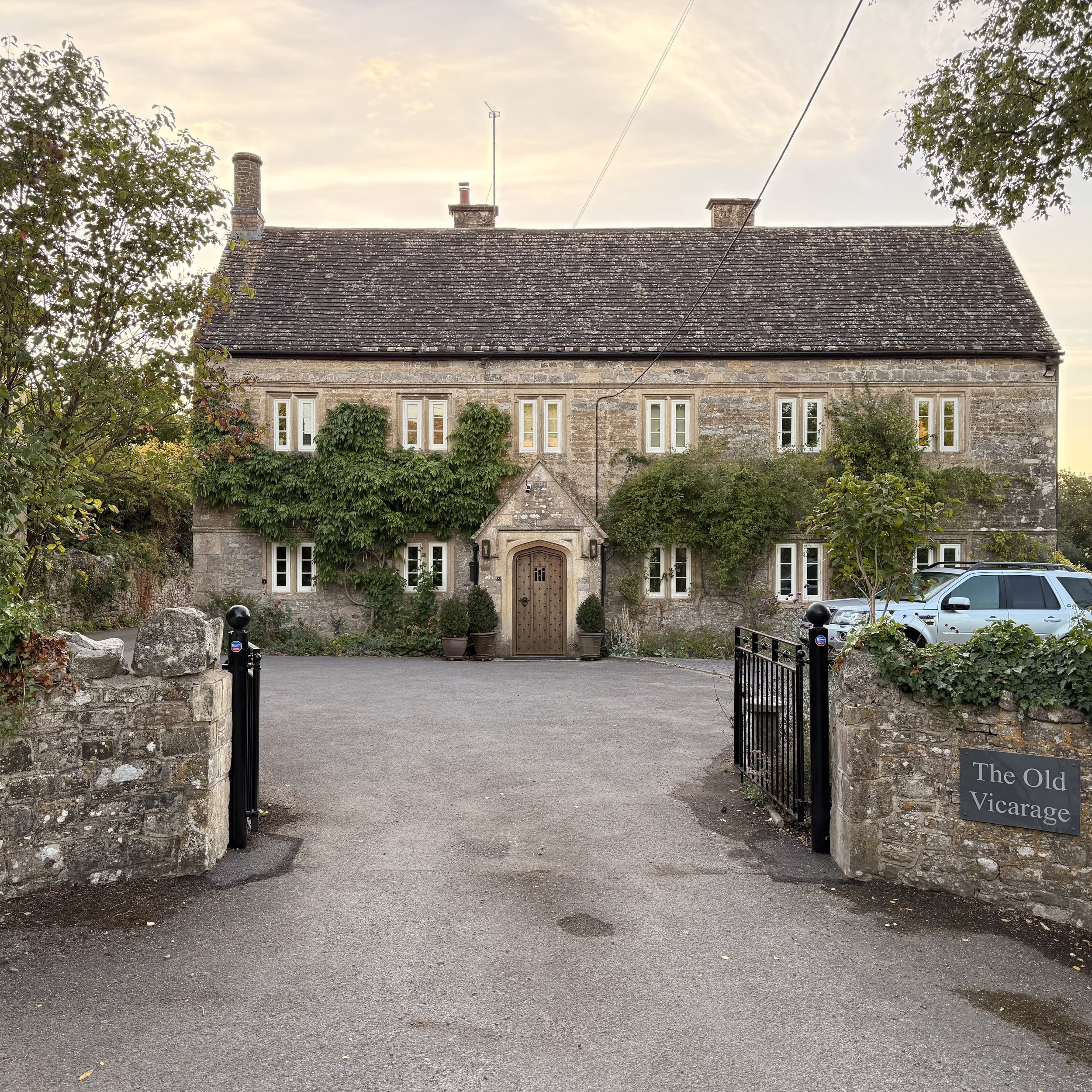
Where we host Leadership Gatherings and other learning events and experiences
Much of that work takes place at The Old Vicarage, a former Somerset farmhouse dating from 1598, when Elizabeth I was still on the throne. Throughout the year, its house and gardens become home to workshops, gatherings, conversations and shared experiences inspired by heritage.
One of the loveliest moments since Asterion began happened during an open days.
Among our visitors was a lady called Mary. Her father had been the last vicar to live at the Old Vicarage, and this had been her family home throughout the 1970s.
As she wandered around the place, she spoke with such warmth that it was obvious this place had never really left her.
She was delighted to see somewhere she’d loved being loved again.
Before she left, she handed me a collection of old photographs she’d brought with her.
There she was as a teenager, sitting on the very steps where I now often drink my morning coffee, holding a tiny kitten. There she was again, cutting her wedding cake beside the mullioned windows in the drawing room. Another photograph showed family gathered in the kitchen that I love to huddle with friends in.
I was genuinely touched that she’d gone to the effort of bringing them.
She’d heard from friends in the village how much care had gone into restoring the house and gardens. She was simply happy to see a place she’d loved so deeply being loved once again.
Before she left, I asked someone to take a photograph of us together.
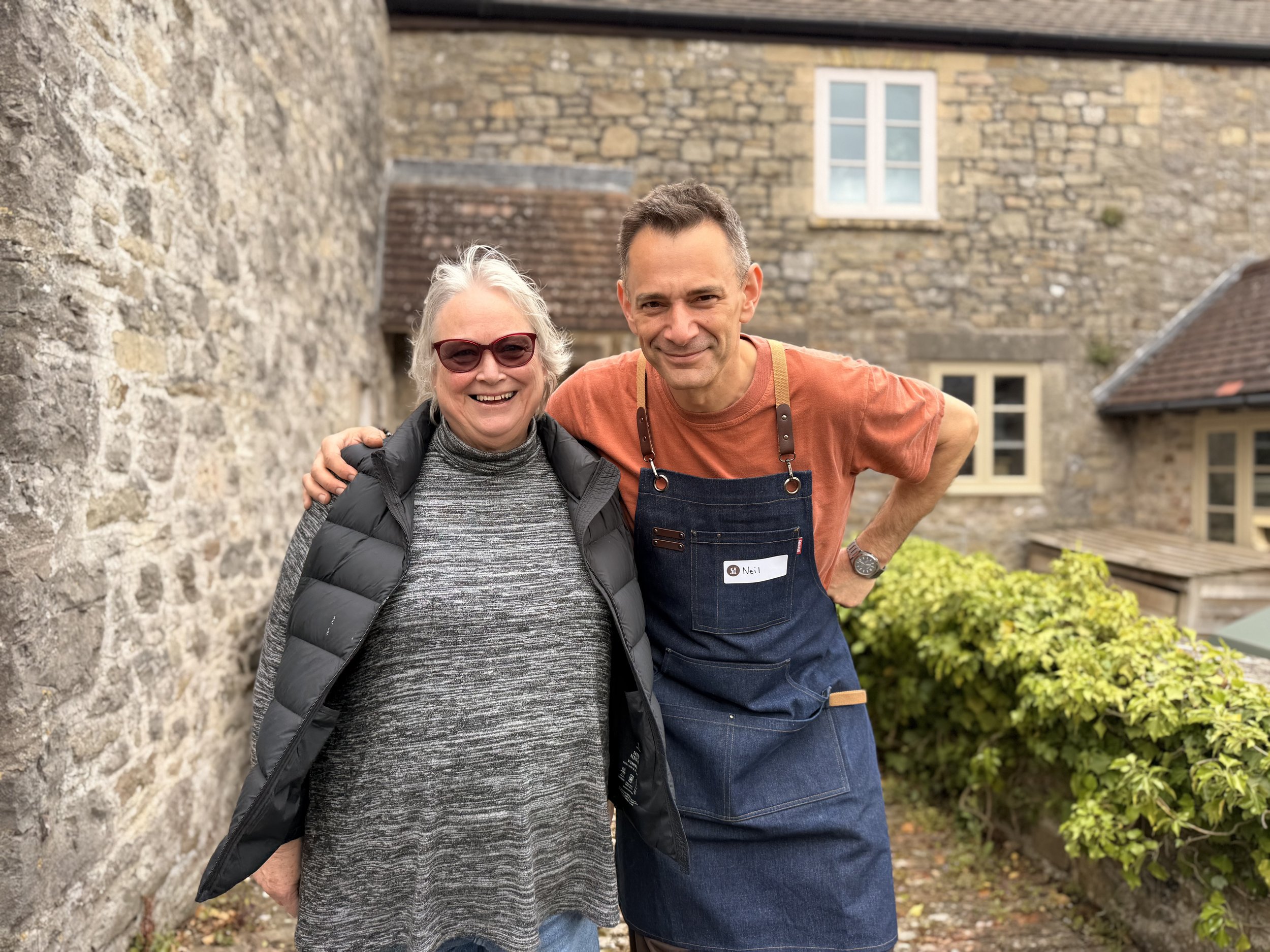
Mary and Neil on the upper terrace.
We also recreated the photograph of her sitting on the steps in exactly the same place, five decades apart.
That evening I found myself looking through Mary’s photographs again.
Then I began looking at even older images of the Old Vicarage.
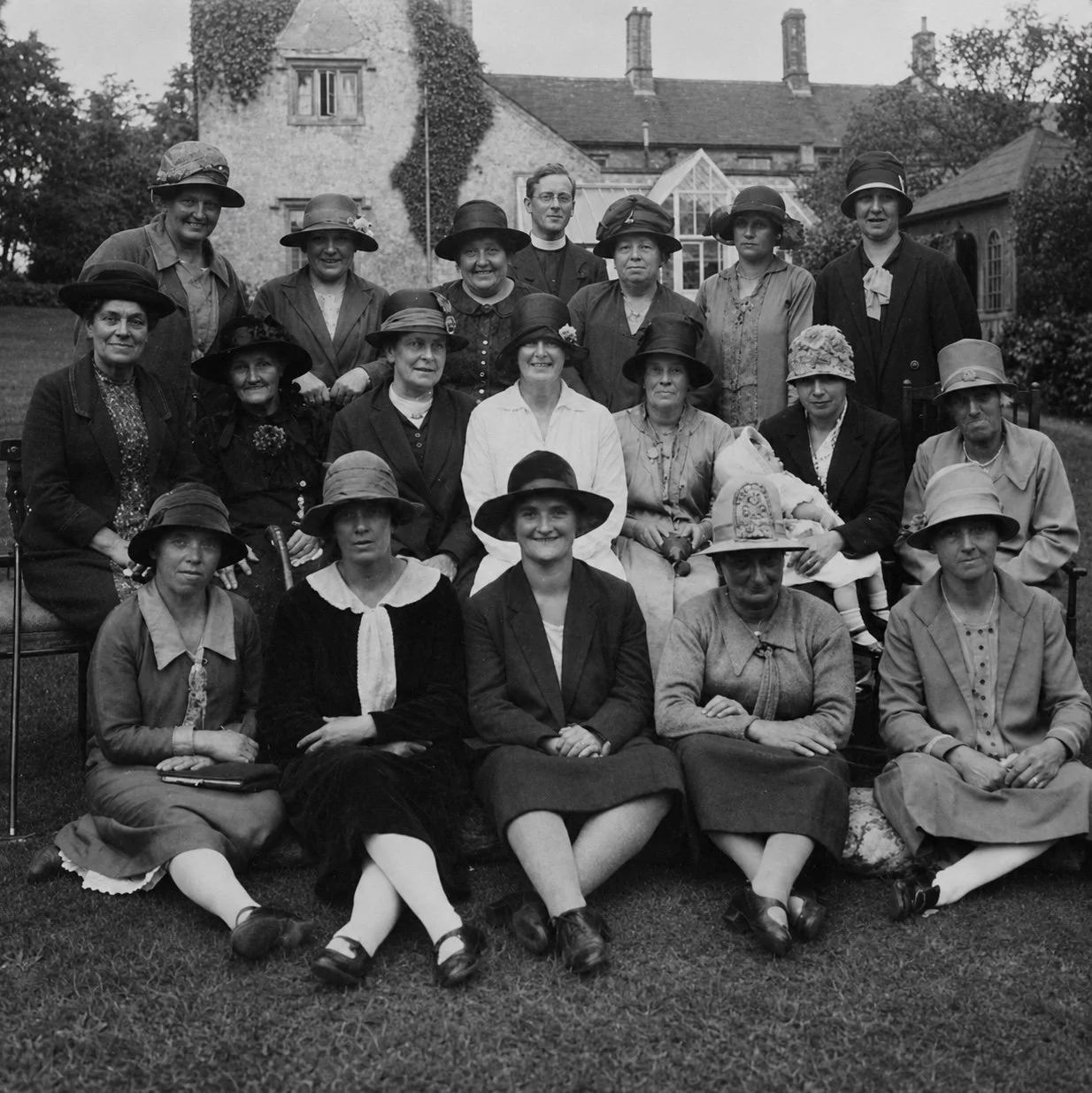
Rev’d Lloyd-Williams with the Mothers Union, 1930, sat in what is now the Kitchen Garden.
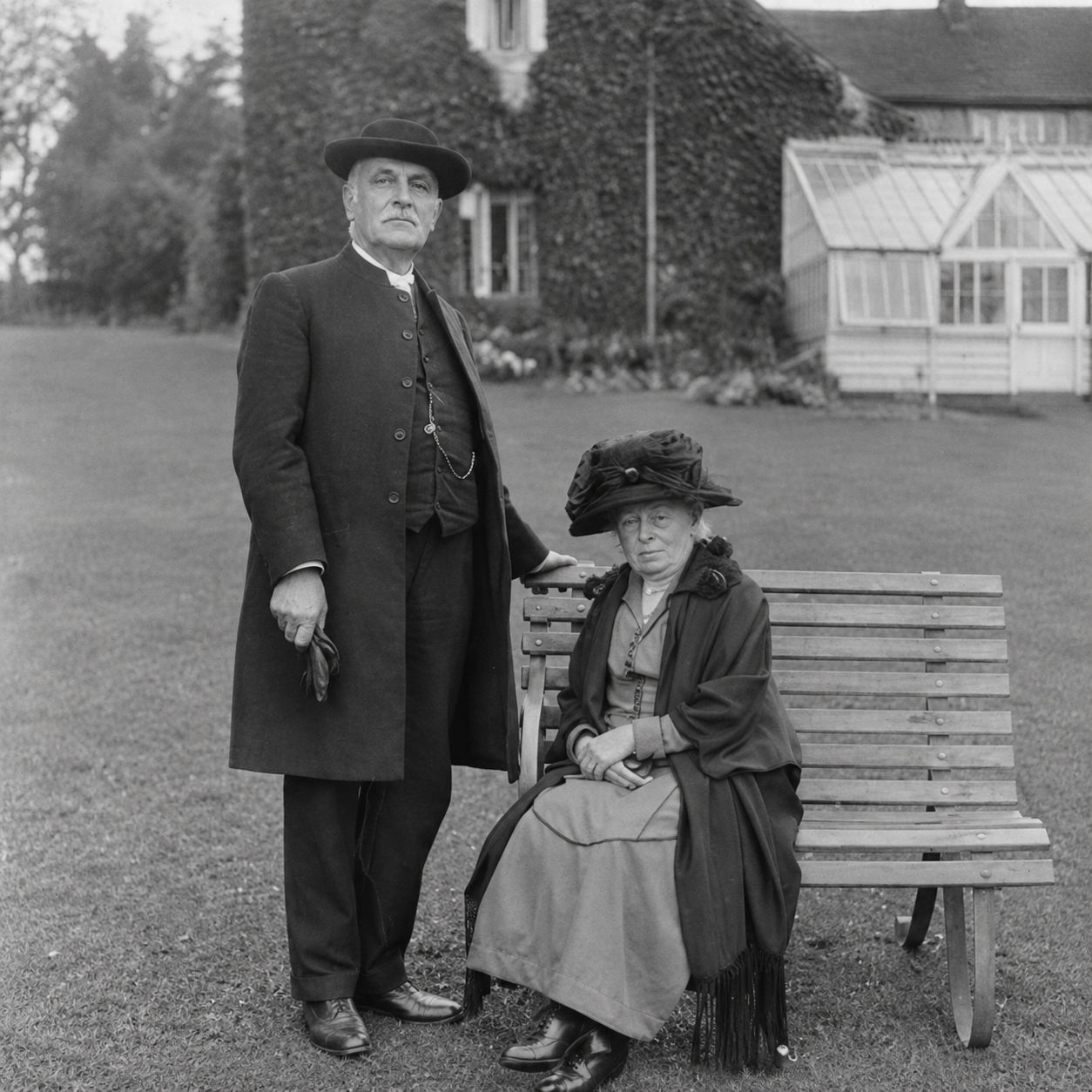
Rev’d and Mrs Honeywill, the second vicar who came here in 1896.
The same house.
Different gatherings.
Different lives.
Different generations.
Each of them, for a period of time, calling this place home.
It was then that something quietly clicked.
I realised that some of the most important things in life aren’t defined by ownership at all.
They’re defined by responsibility.
A home.
A business.
A team.
A community.
We may hold the title deeds, the share certificates or the job title, but none of those things are ours in the absolute sense.
We’re simply entrusted with the opportunity to care for them, strengthen them and, one day, pass them on.
Our Chapter
That realisation changed how I thought about everything I’d done here.
When I bought the Old Vicarage, the survey quite reasonably couldn’t reveal what lay beneath the floors. Only once work had begun on a new bathroom did the hidden structural problems become apparent. Floors had begun to move. 1980s renovations had been poorly executed, and were actually dangerous and put the building at risk of failing. Wiring and plumbing were nearing the end of their lives.
I had a choice.
Repair what was visible and hope for the best.
Or deal properly with the structure while I had the chance.
Having previously taken the decision to make myself mortgage-free, this decision consumed much of the capital I’d realised from selling Aurora.
It wasn’t what I’d planned.
But I never considered taking shortcuts.
If I was fortunate enough to care for this place, I wanted to hand it on in better condition than I found it.
Most of that investment will never be seen.
The floors no longer move.
Damp was no longer penetrating.
The bones of the house are strong again.
The wiring is safe.
The plumbing is fit for the future.
Beautiful finishes came afterwards.
Longevity came first.
Looking back, I realise the proceeds from selling Aurora didn’t simply mark the end of one chapter.
They made it possible to begin the next.
They enabled me to restore the Old Vicarage and create Asterion. A business that now brings people together to learn, create and reconnect with the enduring value of doing things well.
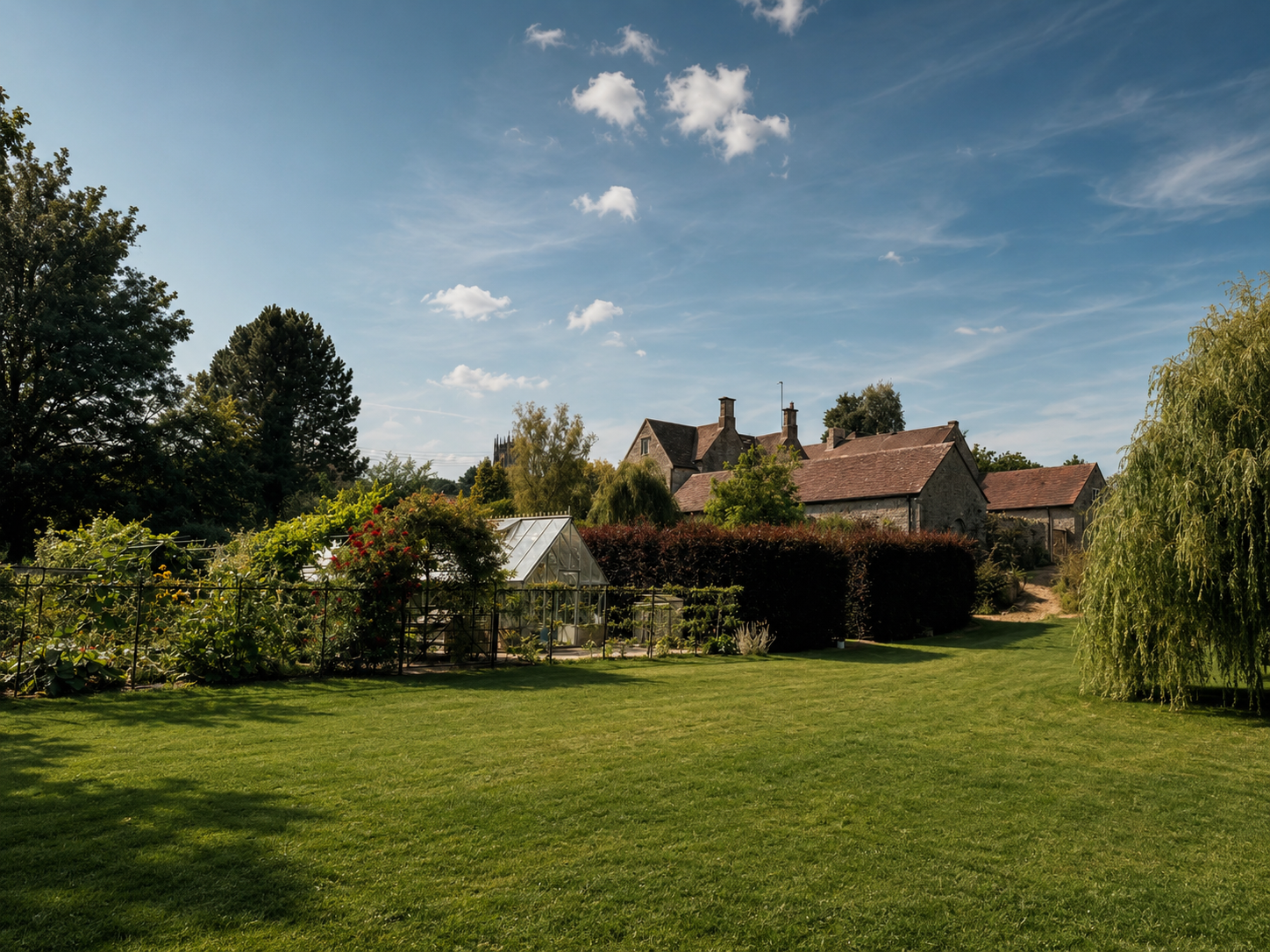
A view of the kitchen garden and The Old Vicarage in Leigh-on-Mendip, Somerset, where we host events and people gather to learn.
Perhaps the clearest expression of that is the kitchen garden.
When I arrived, much of the three-acres of land surrounding the house was simply grass.
Today it has a productive garden woven into the wider landscape of the Old Vicarage.
Guests gather there to learn horticultural and artistic skills, to spend time together and to rediscover the quiet satisfaction of creating things with their own hands.
Much of the food served at lunch comes from the garden.
The fruit becomes homemade jams for afternoon tea.
New tea blends, the start of product lines, are beginning life there too.
But the kitchen garden’s greatest purpose isn’t commercial.
It’s human.
People tell me they leave feeling a little more grounded than when they arrived.
A little more connected to place.
A little more capable.
A little more inspired.
Every generation leaves something behind.
Ours happens to be a kitchen garden.
Not because I expect it to remain exactly as I’ve left it.
But because I hope those who come after me inherit something richer than an empty field.
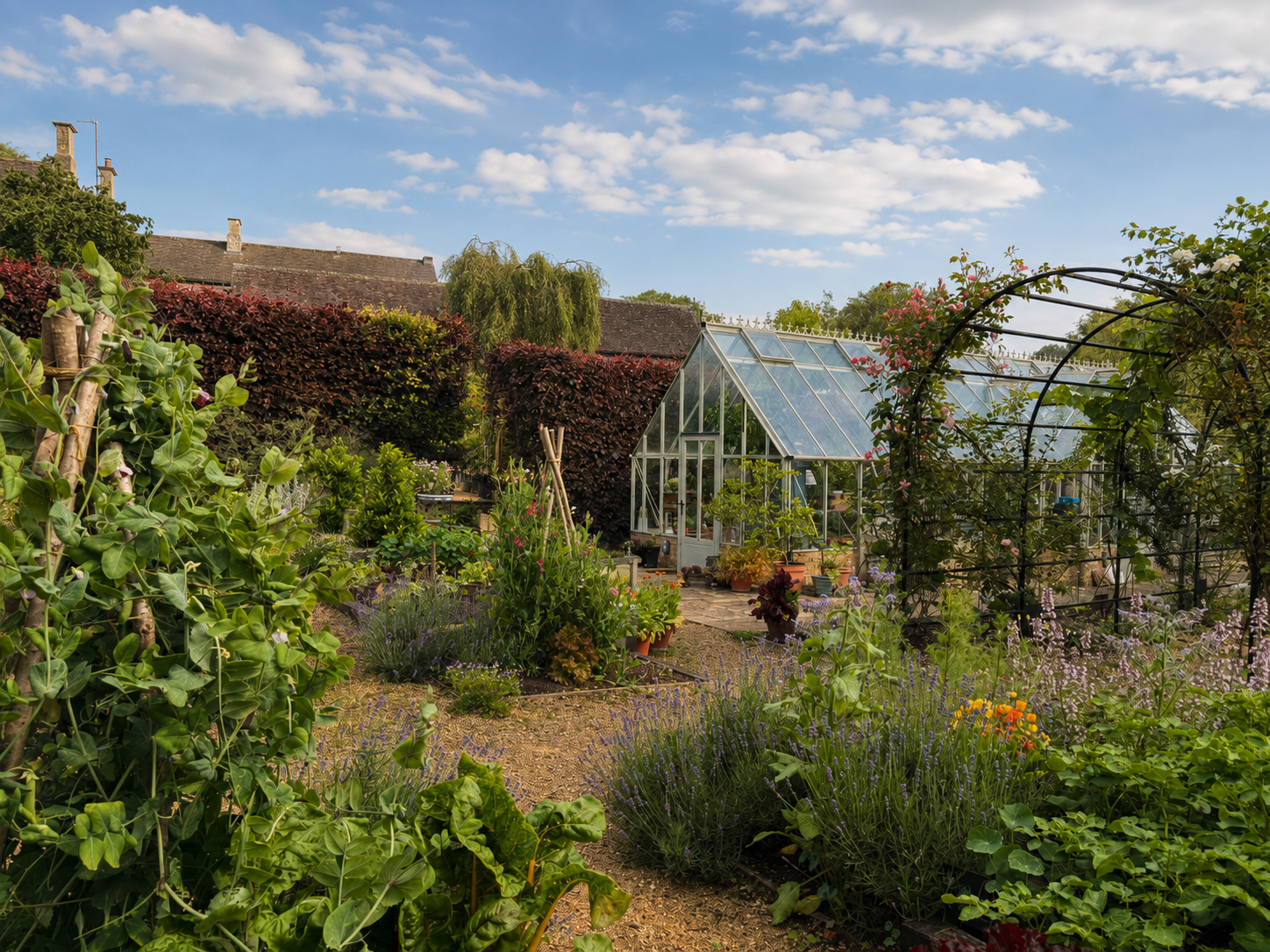
Kitchen Garden where people come to connect and learn new skills they take back into their lives.
Leadership Is No Different
The more I’ve reflected on all of this, the more I’ve realised I’ve always tried to approach organisations in exactly the same way.
Leadership isn’t simply about improving what’s visible.
It’s about strengthening what everything else depends upon.
Culture before reputation.
Capability before growth.
Succession before dependency.
Long-term resilience before short-term applause.
To me, that isn’t a sentimental philosophy.
It’s a commercial one.
The strongest organisations aren’t built around indispensable founders, chief executives or chairs.
They’re built around values, capable people and systems that allow the organisation to become stronger with each phase of leadership.
When Claire and I sold Aurora, one of the things that gave me the greatest satisfaction wasn’t the smooth, well-executed transaction itself.
It was knowing the business was ready.
The leadership was strong.
The culture was resilient.
Its future no longer depended on us.
The same is true when I look at GHMC today.
I feel enormously proud of the contribution I made over fifteen years, but even more pleased to see the network continuing to flourish under Claire’s leadership, with Jonathan Wilson as chair, Tim Goddard, president, and colleagues around the world.
That’s exactly as it should be.
If an organisation depends on one person, we’ve tethered its future to our own.
If it grows beyond us, we’ve done our job.
When Mary visited, she didn’t thank me for restoring an old house.
She thanked me for making it a place that people could still enjoy.
A place that still welcomed people.
A place that still entertained.
A place that was alive.
That stayed with me.
Good stewardship isn’t about preserving the past.
It’s about creating the conditions for a worthwhile future.
Every generation has a responsibility to decide what is worth carrying forward.
Then to leave its own thoughtful contribution for those who come next.
I can’t think of a better definition of leadership than that.
Continue exploring
Every article in Work Well asks what is worth carrying forward into the way we work together.
Related reading
Two Meetings — Why the best leaders create cultures where people feel able to speak up.
Camaraderie — Why the strongest organisations are rarely built by brilliant individuals alone.
Related experience
Leadership Gatherings
Heritage-inspired experiences for leadership teams looking to think well, work well and build organisations that endure.